In distributed systems, things fail. Networks drop packets, services restart, and clients retry requests. Without careful design, these retries can cause duplicate actions — charging customers twice, sending the same email multiple times, or creating duplicate records. The idempotency design pattern is your defense against these reliability nightmares.
What is Idempotency?
An operation is idempotent if performing it multiple times produces the same result as performing it once. Mathematically:
f(f(x)) = f(x)
In the context of APIs and distributed systems:
An idempotent operation can be safely retried without causing unintended side effects.
Some operations are naturally idempotent:
- GET requests — Reading data doesn’t change state
- DELETE by ID — Deleting the same resource twice still results in it being deleted
- SET operations — Setting a value to X, regardless of how many times, leaves it at X
But many operations are NOT naturally idempotent:
- POST (create) — Each call might create a new resource
- Increment/decrement — Each call changes the value
- Sending notifications — Each call triggers another message
- Financial transactions — Each call moves money
This is where the idempotency design pattern comes in.
The Core Pattern
The idempotency pattern works by associating each request with a unique idempotency key. The server tracks which keys it has processed and their results.
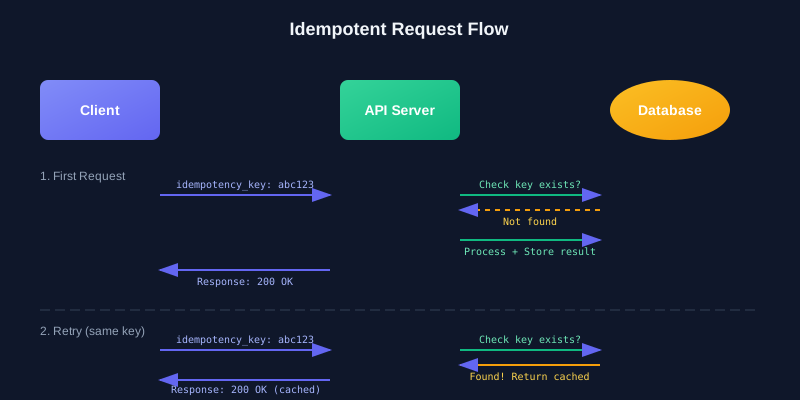
Here’s the flow:
- Client generates a unique idempotency key (usually a UUID or deterministic hash)
- Client sends request with the key in a header (e.g.,
Idempotency-Key: abc123) - Server checks if it has seen this key before
- If NOT found: Process the request, store the key + result, return response
- If found: Return the cached result immediately (no reprocessing)
Implementation in Go
Here’s a practical implementation using Redis for idempotency key storage:
package idempotency

import (
    "context"
    "crypto/sha256"
    "encoding/hex"
    "encoding/json"
    "errors"
    "time"

    "github.com/redis/go-redis/v9"
)

type Status string

const (
    StatusPending   Status = "PENDING"
    StatusCompleted Status = "COMPLETED"
    StatusFailed    Status = "FAILED"
)

type CachedResponse struct {
    Status     Status          `json:"status"`
    StatusCode int             `json:"status_code"`
    Body       json.RawMessage `json:"body"`
    CreatedAt  time.Time       `json:"created_at"`
}

type Store struct {
    redis *redis.Client
    ttl   time.Duration
}

func NewStore(redis *redis.Client, ttl time.Duration) *Store {
    return &Store{redis: redis, ttl: ttl}
}

// Check returns the cached response if the key exists
func (s *Store) Check(ctx context.Context, key string) (*CachedResponse, error) {
    data, err := s.redis.Get(ctx, s.keyPrefix(key)).Bytes()
    if errors.Is(err, redis.Nil) {
        return nil, nil // Key doesn't exist
    }
    if err != nil {
        return nil, err
    }

    var resp CachedResponse
    if err := json.Unmarshal(data, &resp); err != nil {
        return nil, err
    }
    return &resp, nil
}

// Lock attempts to acquire a lock for processing
// Returns true if lock acquired, false if key already exists
func (s *Store) Lock(ctx context.Context, key string) (bool, error) {
    pending := CachedResponse{
        Status:    StatusPending,
        CreatedAt: time.Now(),
    }
    data, _ := json.Marshal(pending)

    // SET NX - only set if not exists
    ok, err := s.redis.SetNX(ctx, s.keyPrefix(key), data, s.ttl).Result()
    return ok, err
}

// Complete stores the final response
func (s *Store) Complete(ctx context.Context, key string, statusCode int, body []byte) error {
    resp := CachedResponse{
        Status:     StatusCompleted,
        StatusCode: statusCode,
        Body:       body,
        CreatedAt:  time.Now(),
    }
    data, _ := json.Marshal(resp)
    return s.redis.Set(ctx, s.keyPrefix(key), data, s.ttl).Err()
}

// Fail marks the request as failed
func (s *Store) Fail(ctx context.Context, key string, statusCode int, body []byte) error {
    resp := CachedResponse{
        Status:     StatusFailed,
        StatusCode: statusCode,
        Body:       body,
        CreatedAt:  time.Now(),
    }
    data, _ := json.Marshal(resp)
    return s.redis.Set(ctx, s.keyPrefix(key), data, s.ttl).Err()
}

func (s *Store) keyPrefix(key string) string {
    return "idempotency:" + key
}

// GenerateKey creates a deterministic key from request attributes
func GenerateKey(userID, action string, payload []byte) string {
    h := sha256.New()
    h.Write([]byte(userID))
    h.Write([]byte(action))
    h.Write(payload)
    return hex.EncodeToString(h.Sum(nil))[:32]
}
HTTP Middleware
Here’s middleware that wraps your handlers with idempotency protection:
func IdempotencyMiddleware(store *Store) func(http.Handler) http.Handler {
    return func(next http.Handler) http.Handler {
        return http.HandlerFunc(func(w http.ResponseWriter, r *http.Request) {
            // Only apply to mutating methods
            if r.Method == http.MethodGet || r.Method == http.MethodHead {
                next.ServeHTTP(w, r)
                return
            }

            key := r.Header.Get("Idempotency-Key")
            if key == "" {
                http.Error(w, "Idempotency-Key header required", http.StatusBadRequest)
                return
            }

            ctx := r.Context()

            // Check if we've seen this request before
            cached, err := store.Check(ctx, key)
            if err != nil {
                http.Error(w, "Internal error", http.StatusInternalServerError)
                return
            }

            if cached != nil {
                switch cached.Status {
                case StatusCompleted, StatusFailed:
                    // Return cached response
                    w.Header().Set("X-Idempotency-Replayed", "true")
                    w.WriteHeader(cached.StatusCode)
                    w.Write(cached.Body)
                    return
                case StatusPending:
                    // Request is still being processed
                    w.Header().Set("Retry-After", "1")
                    http.Error(w, "Request in progress", http.StatusConflict)
                    return
                }
            }

            // Try to acquire lock
            locked, err := store.Lock(ctx, key)
            if err != nil {
                http.Error(w, "Internal error", http.StatusInternalServerError)
                return
            }
            if !locked {
                // Race condition - another request got the lock
                w.Header().Set("Retry-After", "1")
                http.Error(w, "Request in progress", http.StatusConflict)
                return
            }

            // Capture the response
            rec := &responseRecorder{ResponseWriter: w, statusCode: 200}
            next.ServeHTTP(rec, r)

            // Store the result
            if rec.statusCode >= 200 && rec.statusCode < 300 {
                store.Complete(ctx, key, rec.statusCode, rec.body.Bytes())
            } else {
                store.Fail(ctx, key, rec.statusCode, rec.body.Bytes())
            }
        })
    }
}

type responseRecorder struct {
    http.ResponseWriter
    statusCode int
    body       bytes.Buffer
}

func (r *responseRecorder) WriteHeader(code int) {
    r.statusCode = code
    r.ResponseWriter.WriteHeader(code)
}

func (r *responseRecorder) Write(b []byte) (int, error) {
    r.body.Write(b)
    return r.ResponseWriter.Write(b)
}
Real-World Example: Notification System
Notification systems are particularly vulnerable to duplicates. A message queue might redeliver the same event due to consumer timeouts, network issues, or acknowledgment failures. Users receiving the same email, SMS, or push notification multiple times is a poor experience.
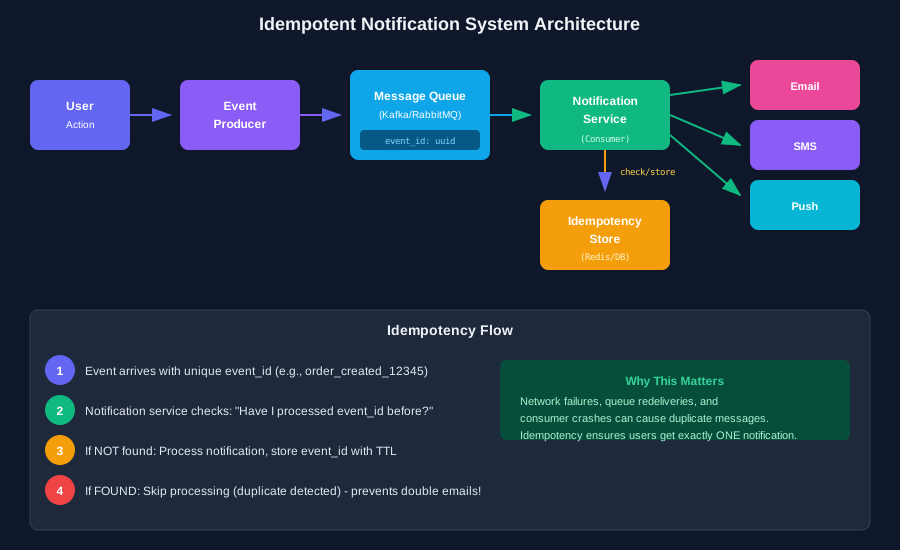
The Problem
Consider this scenario:
- Order service publishes
order_createdevent to Kafka - Notification service consumes the event, sends email
- Before acknowledging, the service crashes
- Kafka redelivers the same event
- User receives duplicate email
Idempotent Notification Service
type NotificationService struct {
    idempotencyStore *idempotency.Store
    emailClient      EmailClient
    smsClient        SMSClient
    pushClient       PushClient
}

type NotificationEvent struct {
    EventID   string            `json:"event_id"`   // Unique event identifier
    Type      string            `json:"type"`       // email, sms, push
    UserID    string            `json:"user_id"`
    Template  string            `json:"template"`
    Data      map[string]string `json:"data"`
}

func (s *NotificationService) ProcessEvent(ctx context.Context, event NotificationEvent) error {
    // Use event_id as idempotency key
    // This ensures the same event is never processed twice
    key := fmt.Sprintf("notification:%s:%s", event.Type, event.EventID)

    // Check if already processed
    cached, err := s.idempotencyStore.Check(ctx, key)
    if err != nil {
        return fmt.Errorf("idempotency check failed: %w", err)
    }

    if cached != nil {
        if cached.Status == idempotency.StatusCompleted {
            slog.Info("duplicate event, skipping",
                "event_id", event.EventID,
                "type", event.Type)
            return nil // Already sent, skip
        }
        if cached.Status == idempotency.StatusFailed {
            slog.Warn("previously failed event",
                "event_id", event.EventID)
            // Could implement retry logic here
            return nil
        }
    }

    // Acquire lock
    locked, err := s.idempotencyStore.Lock(ctx, key)
    if err != nil {
        return err
    }
    if !locked {
        slog.Info("event being processed by another instance",
            "event_id", event.EventID)
        return nil
    }

    // Send notification
    var sendErr error
    switch event.Type {
    case "email":
        sendErr = s.emailClient.Send(ctx, event.UserID, event.Template, event.Data)
    case "sms":
        sendErr = s.smsClient.Send(ctx, event.UserID, event.Template, event.Data)
    case "push":
        sendErr = s.pushClient.Send(ctx, event.UserID, event.Template, event.Data)
    }

    // Record result
    if sendErr != nil {
        s.idempotencyStore.Fail(ctx, key, 500, []byte(sendErr.Error()))
        return sendErr
    }

    s.idempotencyStore.Complete(ctx, key, 200, []byte("sent"))
    return nil
}
Key Design Decisions
-
Use event_id, not message_id: The event producer generates a unique
event_idthat stays constant across redeliveries. Message queue message IDs change on redelivery. -
Combine type + event_id: Allows different notification channels to process the same event independently.
-
TTL on idempotency keys: Keys expire after a reasonable window (e.g., 24-48 hours). This prevents unbounded storage growth while still catching realistic retry scenarios.
-
Graceful duplicate handling: Log and return success rather than erroring. The operation was successful (from the system’s perspective).
Real-World Example: Banking Transactions
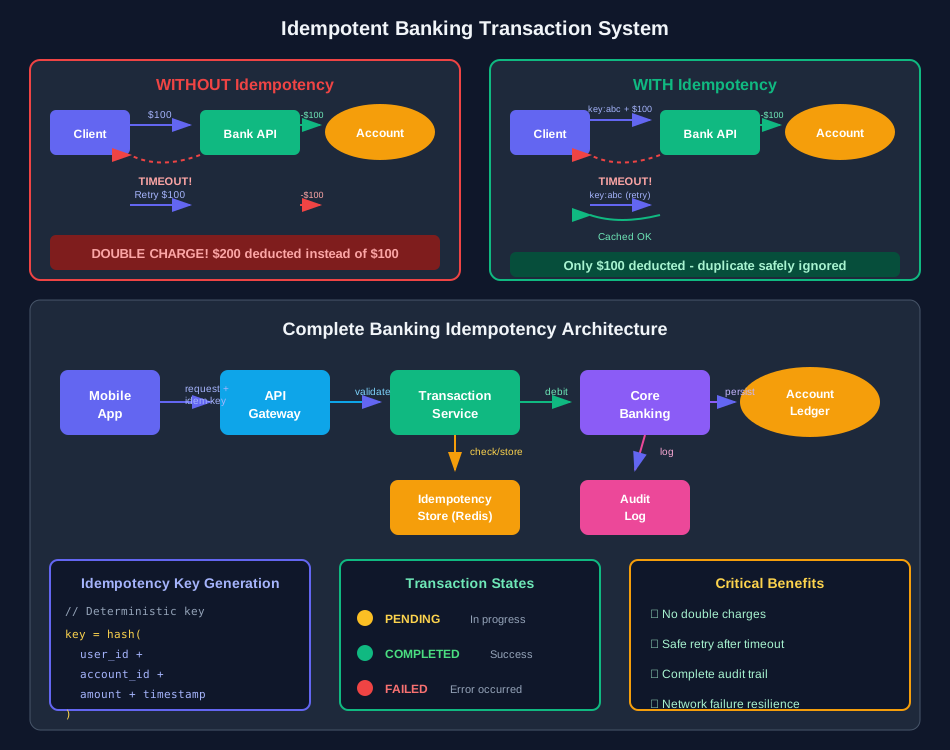
Financial systems have zero tolerance for duplicates. A double charge or double transfer can cause serious problems — customer complaints, regulatory issues, and reconciliation nightmares.
The Transfer API
type TransferRequest struct {
    FromAccount string  `json:"from_account"`
    ToAccount   string  `json:"to_account"`
    Amount      float64 `json:"amount"`
    Currency    string  `json:"currency"`
    Reference   string  `json:"reference"` // Client-provided reference
}

type TransferResponse struct {
    TransactionID string    `json:"transaction_id"`
    Status        string    `json:"status"`
    Amount        float64   `json:"amount"`
    Currency      string    `json:"currency"`
    CreatedAt     time.Time `json:"created_at"`
}

func (s *TransferService) Transfer(ctx context.Context, key string, req TransferRequest) (*TransferResponse, error) {
    // Check idempotency
    cached, err := s.idempotencyStore.Check(ctx, key)
    if err != nil {
        return nil, fmt.Errorf("idempotency check failed: %w", err)
    }

    if cached != nil && cached.Status == idempotency.StatusCompleted {
        var resp TransferResponse
        json.Unmarshal(cached.Body, &resp)
        return &resp, nil
    }

    // Validate request
    if err := s.validate(req); err != nil {
        return nil, err
    }

    // Acquire lock
    locked, err := s.idempotencyStore.Lock(ctx, key)
    if err != nil {
        return nil, err
    }
    if !locked {
        return nil, ErrRequestInProgress
    }

    // Execute transfer in a transaction
    var txnID string
    err = s.db.Transaction(func(tx *gorm.DB) error {
        // Debit source account
        if err := s.debit(tx, req.FromAccount, req.Amount); err != nil {
            return err
        }

        // Credit destination account
        if err := s.credit(tx, req.ToAccount, req.Amount); err != nil {
            return err
        }

        // Create transaction record
        txn := Transaction{
            ID:            uuid.New().String(),
            IdempotencyKey: key,
            FromAccount:   req.FromAccount,
            ToAccount:     req.ToAccount,
            Amount:        req.Amount,
            Currency:      req.Currency,
            Reference:     req.Reference,
            Status:        "completed",
            CreatedAt:     time.Now(),
        }

        if err := tx.Create(&txn).Error; err != nil {
            return err
        }

        txnID = txn.ID
        return nil
    })

    if err != nil {
        s.idempotencyStore.Fail(ctx, key, 500, []byte(err.Error()))
        return nil, err
    }

    resp := TransferResponse{
        TransactionID: txnID,
        Status:        "completed",
        Amount:        req.Amount,
        Currency:      req.Currency,
        CreatedAt:     time.Now(),
    }

    body, _ := json.Marshal(resp)
    s.idempotencyStore.Complete(ctx, key, 200, body)

    return &resp, nil
}
Defense in Depth: Database-Level Idempotency
For critical financial operations, add a database-level constraint as a safety net:
CREATE TABLE transactions (
    id UUID PRIMARY KEY,
    idempotency_key VARCHAR(64) NOT NULL,
    from_account VARCHAR(32) NOT NULL,
    to_account VARCHAR(32) NOT NULL,
    amount DECIMAL(15,2) NOT NULL,
    currency CHAR(3) NOT NULL,
    status VARCHAR(20) NOT NULL,
    created_at TIMESTAMP NOT NULL,

    CONSTRAINT unique_idempotency_key UNIQUE (idempotency_key)
);
This ensures that even if the Redis idempotency check fails, the database won’t allow duplicate transactions.
Handling Edge Cases
The PENDING State Problem
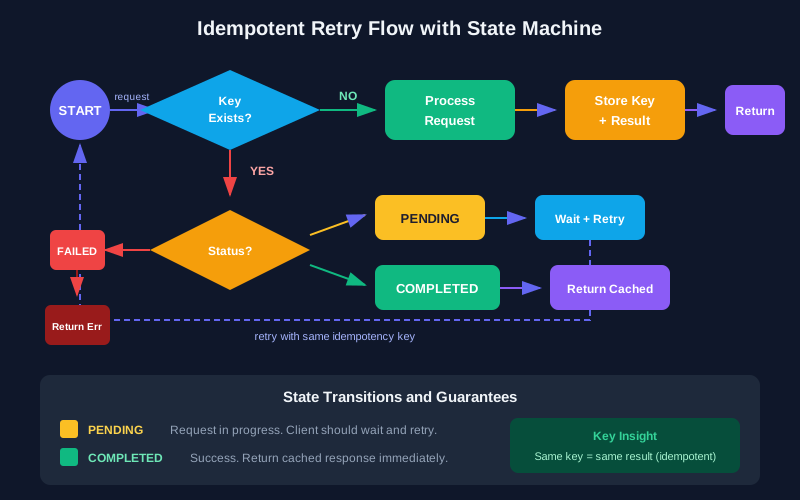
What happens if the server crashes while processing a request? The key is in PENDING state, but no result exists. Options:
- Timeout the PENDING state: If PENDING for > N seconds, allow reprocessing
- Background cleanup: A worker marks stale PENDING entries as FAILED
- Client responsibility: Client waits and retries with the same key
func (s *Store) CheckWithTimeout(ctx context.Context, key string, pendingTimeout time.Duration) (*CachedResponse, error) {
    cached, err := s.Check(ctx, key)
    if err != nil || cached == nil {
        return cached, err
    }

    // If PENDING for too long, treat as not found
    if cached.Status == StatusPending {
        if time.Since(cached.CreatedAt) > pendingTimeout {
            // Delete stale entry
            s.redis.Del(ctx, s.keyPrefix(key))
            return nil, nil
        }
    }

    return cached, nil
}
Key Generation Strategies
Client-generated UUID (Stripe’s approach):
Idempotency-Key: 550e8400-e29b-41d4-a716-446655440000
- Simple to implement
- Client controls retry behavior
- Risk: Client might generate new UUID on retry
Deterministic hash (prevents accidental retries):
key := sha256(userID + accountID + amount + timestamp.Truncate(1*time.Minute))
- Same logical request always generates same key
- Protects against client bugs
- Trade-off: Harder for clients to intentionally retry
Composite key (for specific business logic):
Idempotency-Key: order:12345:charge
- Self-documenting
- Easy to debug
- Ties to business entities
TTL Considerations
| Use Case | Recommended TTL |
|---|---|
| Payment processing | 24-48 hours |
| Notification sending | 1-4 hours |
| API mutations | 24 hours |
| Batch operations | Duration of batch + buffer |
Longer TTLs protect against delayed retries but consume more storage. Choose based on your retry patterns and storage budget.
Best Practices
-
Always require idempotency keys for mutating operations — Don’t make it optional. HTTP 400 if missing.
-
Return the same response on replay — Include status code, headers, and body. The client shouldn’t be able to tell if it’s a replay.
-
Set
X-Idempotency-Replayed: trueheader — Helps with debugging and auditing. -
Log idempotency key with every request — Essential for debugging and tracing duplicate requests.
-
Use a dedicated storage system — Redis is ideal. Don’t burden your primary database with high-frequency idempotency checks.
-
Handle PENDING state gracefully — Return 409 Conflict with Retry-After header. Don’t leave clients hanging.
-
Consider scope carefully — Should keys be per-user? Per-API-key? Global? This affects both collision probability and security.
-
Monitor duplicate rates — High duplicate rates might indicate client bugs, network issues, or legitimate retry storms.
Conclusion
Idempotency is not optional in distributed systems — it’s a fundamental reliability pattern. Whether you’re building notification systems that shouldn’t spam users or payment systems that can’t afford double charges, the pattern remains the same:
- Generate or accept a unique key
- Check before processing
- Process exactly once
- Cache and return the result
The examples in this post — notification systems and banking transactions — represent two ends of the severity spectrum, but the implementation pattern applies universally. Start with the middleware approach for HTTP APIs, and add database-level constraints for critical operations.
When things inevitably fail in production, idempotency ensures that retries are safe, customers are happy, and your on-call engineers can sleep peacefully.